Jan 13, 2026
Human vs. AI Content
Does the Distinction Still Matter?
For years, content online was assumed to be human-made by default. A photo meant someone stood behind a camera. A painting meant someone held a brush. A story meant someone typed each word.
Artificial intelligence has complicated that assumption.
Today, AI systems can generate images, music, code, essays, and videos in seconds. The result often looks indistinguishable from human-created work. This raises a question that feels both philosophical and practical: does the distinction between human and AI content still matter?
The Blurring Line
In many cases, AI-generated content is not purely machine-made. A human writes the prompt, refines the output, selects the best variation, and publishes it. Is that human content? AI content? Or something in between?
The creative process is becoming hybrid. Instead of replacing the human, AI often acts as an amplifier — accelerating ideation, expanding options, and enabling rapid iteration. The final result is a collaboration.
As that collaboration deepens, the boundary becomes less clear.
Why the Distinction Does Matter
There are still strong reasons to differentiate:
Transparency – Audiences deserve to know how content was created.
Trust – In journalism, research, and education, authorship affects credibility.
Ethics and training data – Questions about originality and data sourcing remain important.
Economic impact – Attribution affects ownership and compensation.
In certain contexts, whether content is AI-generated is highly relevant.
Why the Distinction May Matter Less Over Time
At the same time, history shows that new creative tools eventually become normalized. Photography was once criticized for being “too mechanical.” Digital art faced skepticism. Even word processors changed how writing was perceived.
Eventually, tools become part of the process rather than the headline.
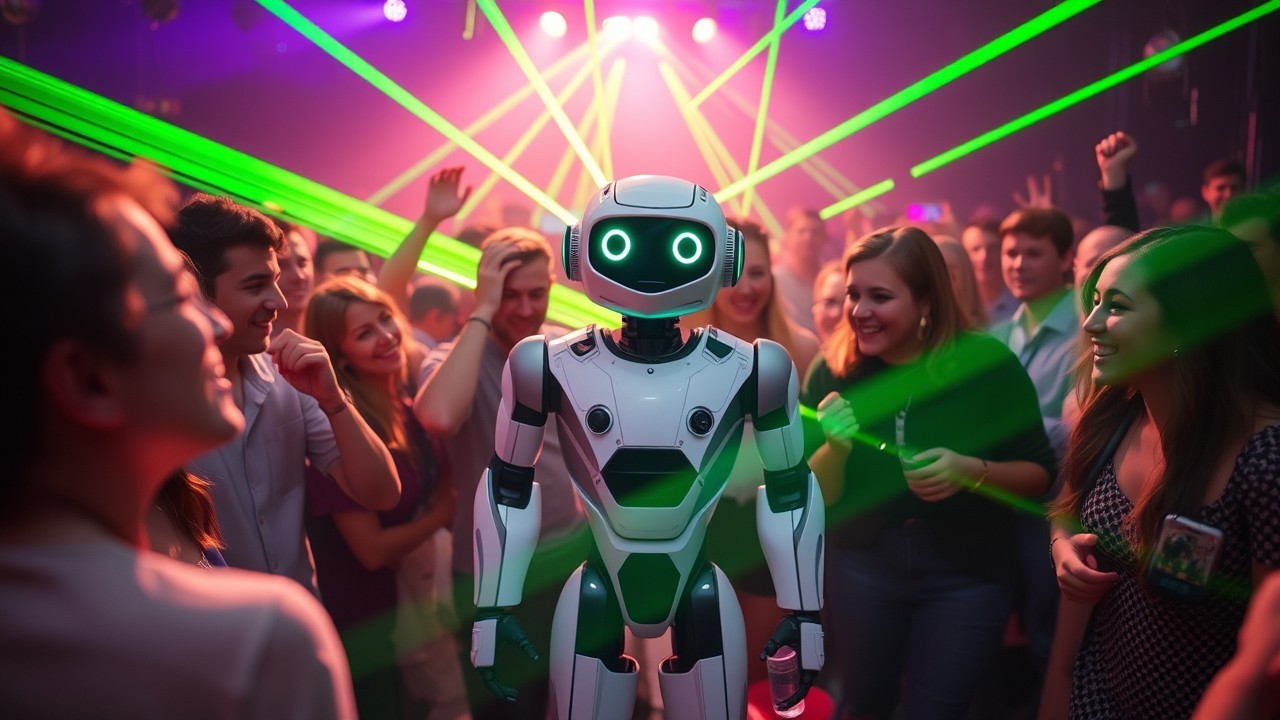
On AI-native platforms like Syntic, the distinction is simplified by design: everything is AI-generated. The focus shifts from who made it to what was created and how creatively the tools were used. The conversation becomes less about legitimacy and more about innovation.
A Shift in Creative Value
As AI becomes more accessible, the value of creativity may move away from manual execution and toward:
Concept originality
Prompt design
Curation and selection
Narrative building
System orchestration
The question stops being “Did a human make this?” and becomes “Is this interesting, meaningful, or impactful?”
So, Does It Still Matter?
Right now, yes — especially for transparency and ethics.
But culturally? The distinction may gradually fade as AI becomes a standard creative instrument. Instead of dividing content into human vs. machine, we may start thinking in terms of collaboration levels and creative direction.
The future of content is unlikely to be purely human or purely artificial.
It will be synthetic — a spectrum of shared intelligence shaping what we create and how we experience it.



Our latest stories:
Jun 1, 2025
The Rise of Synthetic Social Networks
Aug 12, 2025
From Prompt to Post

Oct 12, 2025
Synthetic Identity
See all posts